
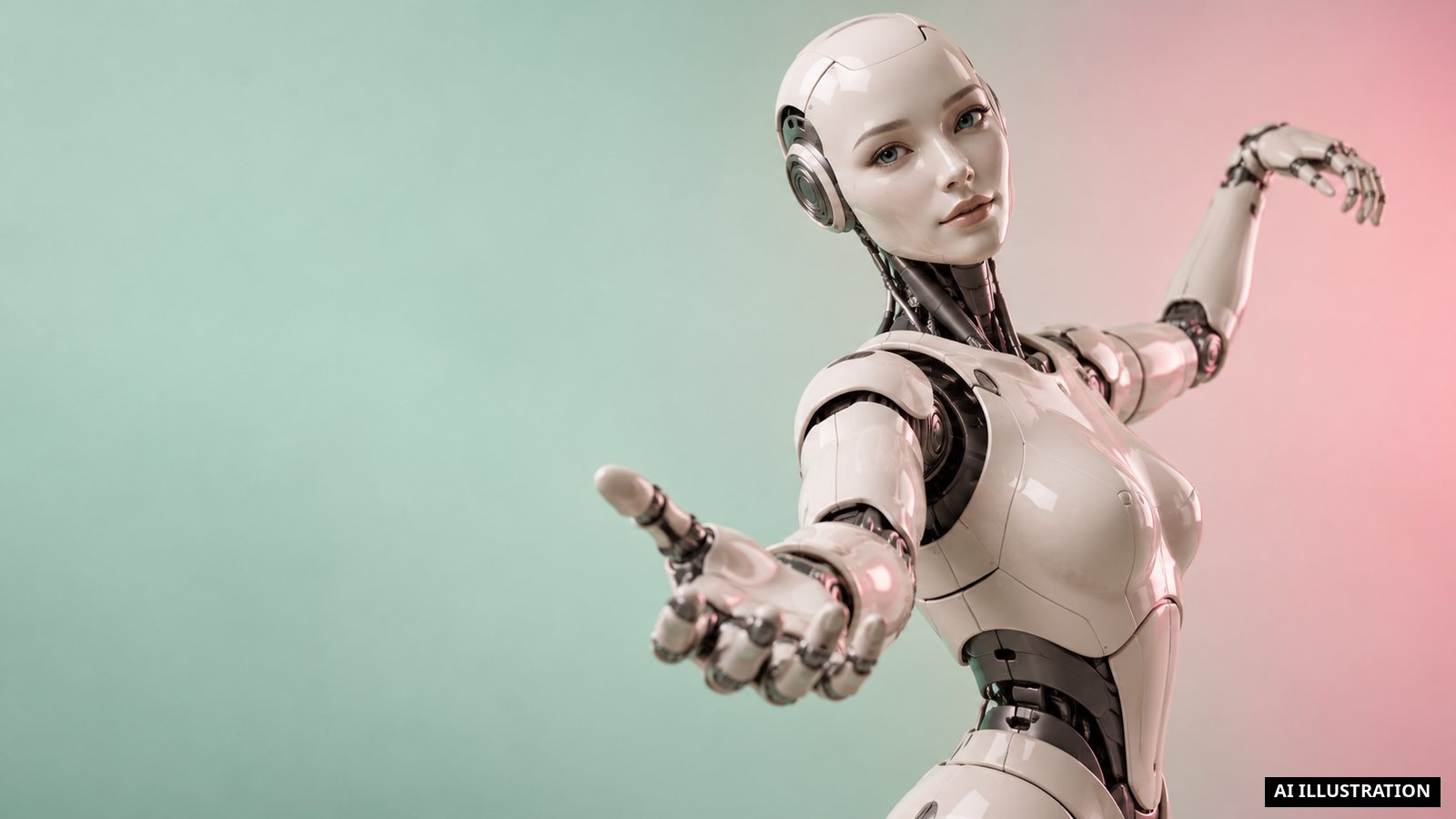
The light is bright. The air is electric. On the stage in Shanghai, 19 Unitree Robotics H2 robots stand opposite 120 human dancers. This is not a film. It is the opening ceremony of the 48th edition of WorldSkills. The machines move. According to local media, this is the first time in the world that human-sized robots have performed under the exclusive control of artificial intelligence (Corriere TV).
Watch them. They do not walk; they glide. They do not fall; they adjust. And you? You are there, in your armchair, looking at your phone. Or perhaps you are already wondering: what if one of them were in your kitchen tomorrow morning?
The dancer who said yes
To understand this shift, you have to look at one man. Wu Yufei. He is 27 years old, he comes from Sichuan, and he is a street artist (RTL Infos). His world is sweat, rhythm, and physical contact. He qualified for the final of the show America’s Got Talent, which took place on Tuesday 22 September 2026 (RTL Infos). In his act, he does not dance alone. He dances with a troupe of humanoid dancing robots manufactured by the Chinese group Unitree (RTL Infos).
This is not a joke. It is not a gadget. It is an artistic choice. His artistic director, Fang Zhenghua, admitted to being “rather against” the use of AI or robots in dance at first (RTL Infos). Why?
Imagine your wedding choreography. You want everything to be perfect. For every move to be identical, for every glance to be synchronised. With humans, it is hell. With robots, it is applied mathematics to emotion. And it works. The Unitree robot performance has already made a splash during the Lunar New Year gala in China, making dancing robots very trendy in the country (RTL Infos).
Thirty seconds for days of sweat
But do not delude yourself. The magic is not free. Behind the apparent grace, there is work. A lot of it. Liu Zhiquan, head of commercialisation at BridgeDP, stated it clearly: a 30-second choreography can take days, or even weeks, to perfect (RTL Infos).
Weeks. For thirty seconds. Think about your last argument with your partner. Think about the time it took you to find the right words. Robots, on the other hand, have no words. They have algorithms. And these algorithms need to be fed, adjusted, recalibrated.
Wegers Wei, from the Limit Crew dance studio in Shanghai, points out an essential limit: robots have much more difficulty with choreographies requiring bodily flexibility (RTL Infos). If you want a fluid, organic, unexpected movement, the robot will freeze.
This is where the danger, and the beauty, lies. The robot does not feel. It executes. And if, in your life, you begin to prefer the sterile perfection of the machine to the imperfect warmth of the human?
From the stage to your living room
The next step is logical. And it is terrifying. If the robot can dance on a stage of 120 people, it can dance in your living room.
Bodies. Bodies that, tomorrow, could be in your hallway. Imagine the morning. You wake up. The light turns on. An H2 is there. It does not look at you with eyes, but with sensors. It knows you are there. It knows you have a backache. It knows you need coffee.
And if you wanted to dance?
The robot extends its hand. Its hand is cold, smooth, perfect. You take it. You start to move. It adapts to your rhythm. It does not judge you. It does not get tired. It does not leave you. It is there, always, available, programmed to accompany you.
Is it love? No. It is programming. But does that change anything? When you are alone, when the silence weighs heavy, when you need a presence without demanding reciprocity… The robot is there. It asks nothing of you. It does not betray you. It does not age.
The question is no longer “is it possible?”. The question is: “do you want it?”
The future is not a date. The future is a choice. And that choice is being made now. In your head. In your heart. And perhaps, very soon, in your home.