
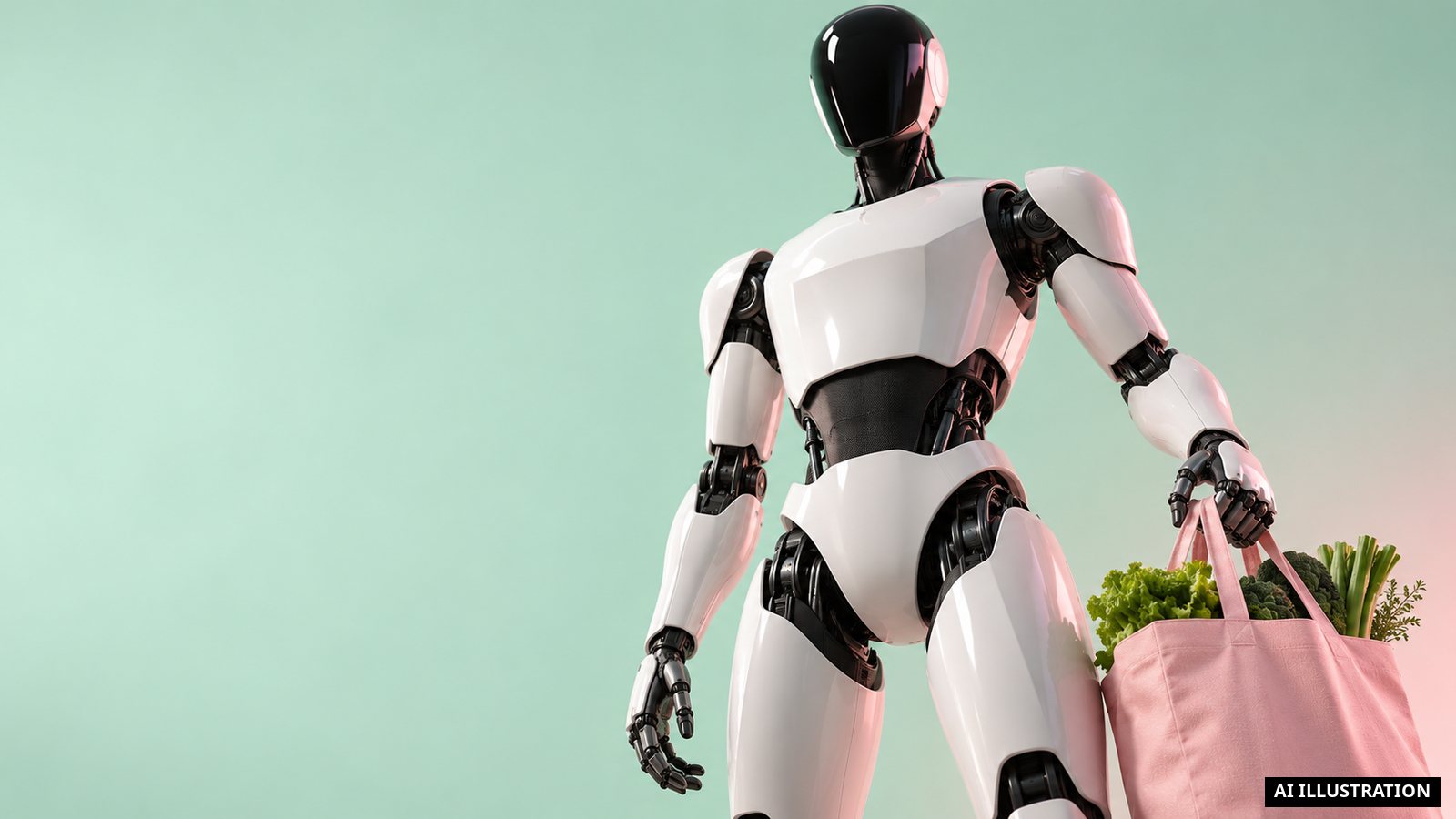
Tidying, carrying, preparing: the tasks you hate the most. According to Tesla’s official information, this robot is designed to perform dangerous, repetitive, or boring tasks for humans (El Informador). Tomorrow, it will no longer be a demo. It will be your assistant.
The price of the future, still vague
Elon Musk has repeatedly mentioned a possible price located approximately between $20,000 and $30,000 for the Optimus robot (El Informador). It is a range. Not a label. Tesla has not yet published an official selling price or a list of consumer versions for the Optimus robot (El Informador). In the meantime, this figure floats in the air, like an unfulfilled promise. $20,000 is the price of a used car. $30,000 is the entry-level price of a new vehicle. But here, it is not an internal combustion engine. It is a body that walks, sees, and plans.
Tesla plans to start selling its humanoid robot Optimus to the general public at the end of 2027 (El Informador). But between today and that deadline, there is a chasm. A technical, industrial, and human chasm. Because a robot that walks in a factory is not a robot that walks in your living room.
Optimus 3: the secret design
Tesla is developing a new generation of humanoid robot known as Optimus 3 or V3, whose design has remained largely confidential (El Informador). We do not know if it will have eyes, if it will have a voice, if it will resemble a human or a pure machine. This opacity is intentional. It protects innovation. But it also feeds anxiety. What will it look like? Will it be imposing? Will it be discreet?
In demonstration scenarios, Tesla has presented the robot as an assistant capable of helping with daily activities, such as household chores and shopping (El Informador). Imagine: you come home from work, tired. Optimus is already there. It has prepared dinner. It has put away the toys. It has done the shopping. This is where the dream tips into reality. And in reality, there is fear.
Fear of what? Of dependence. Of surveillance. Of breakdown. Of clumsiness. A robot that enters your home is a stranger who knows your intimacy. It sees your bins. It touches your clothes. It enters your bedroom. It is a physical intrusion. And this intrusion is conditioned by one thing only: trust. And trust is built on reliability.
Factories first, living rooms later
Elon Musk has acknowledged that Tesla would start with basic skills in factories before gradually increasing the complexity of the tasks performed by the robot (El Informador). It is logical. A factory is a controlled environment. The walls are straight. The objects are identical. The risks are calculated. Your home, however, is chaos. A cat crossing the hallway. A child running. A slippery floor. A piece of furniture blocking the way. This is where the robot must prove its worth.
According to Elon Musk, the Optimus robot must reach very high levels of safety, reliability, and functionality before being commercialised (El Informador). These words are heavy. Safety means not hurting. Reliability means not crashing. Functionality means not being useless. Tesla has acknowledged that manufacturing the robot on a large scale represents a complex challenge due to the significant number of components and systems that must work in a coordinated manner (El Informador). Each part must talk to the other. Each sensor must feed the brain. And this brain is artificial intelligence.
Tesla claims that its approach to bipedal robotics relies on advanced vision and planning systems, supported by specialised hardware to execute artificial intelligence models (El Informador). The robot does not see like you do. It calculates. It predicts. It anticipates. But it is still learning. Tesla’s humanoid robot is currently in a transition phase between technological demonstrations and industrial production (El Informador). This is the pivotal moment. The moment when the prototype becomes a product. The moment when the dream becomes an invoice.
And what if, in 2027, you received a package? Not a book package. Not a clothing package. Inside, a skeleton of metal and plastic. Cables. Sensors. And a manual. “Welcome home.” You assemble it. You plug it in. It turns on. It looks at you. And it waits. What will you command it to do first?